The 4 noble truths of Thailand: Part 3  

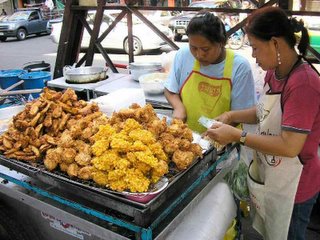
Thailand Street Vendor FoodDon't be afraid to suffer a little for good food.

OK, at some street markets you can buy fried crickets, grasshoppers, worms and chicken heads. You are allowed to fear these delicacies.

In addition to bugs, Thailand offers every cuisine imaginable, much of it delicious. My stomach doesn't take to hot foods, but only the food in Chiang Mai seemed to be too spicy. Everywhere else, I ate well, perhaps too well. Three restaurants on the banks of the Ping River in Chiang Mai were hot, but standouts: The Gallery, the Good View and the Riverside. They all sit side by side on Charoen Rat Road, and they are always crowded.

Live music in the Riverside was mostly cover bands playing classic American pop, like The Doors. I had a ball. In Bangkok, lunch at the Oriental Hotel's patio overlooking the Chao Phraya River made me feel like James Bond. The New York Steak restaurant at the JW Marriott was a good break from pad Thai. And if you feel adventurous, drop into Galaxy (19 Rama 4 Road), a well-known "no-hands restaurant" in Bangkok. Young women and a mamasan feed you and wipe your mouth - it's like practice for being senile. Cabbages and Condoms (10 Sukhumvit Soi 12) is a racy name for a tame (inexpensive) and wonderful Thai restaurant that raises money for Thailand's family-planning nonprofit.

On Koh Samui, The Shack, (88 3 Moo1, Bophut), is an open-air steakhouse run by Larry Snyder, a self-proclaimed nervous, heart-attack-prone New Yorker. Poppies (Samui Ring Road) serves the best Thai food in Thailand on Chaweng Beach. And Prego, run by chef Marco Boscaini, also on Samui Ring Road, is one of the best Italian restaurants I've ever encountered. Need a hamburger fix? Chaweng's most popular bar, Tropical Murphy's Irish pub, serves a tasty one on Samui Ring Road.

source: The Denver Post

Read More...
AddThis Social Bookmark Button

The 4 noble truths of Thailand: Part 3  

Thailand Street Vendor FoodDon't be afraid to suffer a little for good food.

OK, at some street markets you can buy fried crickets, grasshoppers, worms and chicken heads. You are allowed to fear these delicacies.

In addition to bugs, Thailand offers every cuisine imaginable, much of it delicious. My stomach doesn't take to hot foods, but only the food in Chiang Mai seemed to be too spicy. Everywhere else, I ate well, perhaps too well. Three restaurants on the banks of the Ping River in Chiang Mai were hot, but standouts: The Gallery, the Good View and the Riverside. They all sit side by side on Charoen Rat Road, and they are always crowded.

Live music in the Riverside was mostly cover bands playing classic American pop, like The Doors. I had a ball. In Bangkok, lunch at the Oriental Hotel's patio overlooking the Chao Phraya River made me feel like James Bond. The New York Steak restaurant at the JW Marriott was a good break from pad Thai. And if you feel adventurous, drop into Galaxy (19 Rama 4 Road), a well-known "no-hands restaurant" in Bangkok. Young women and a mamasan feed you and wipe your mouth - it's like practice for being senile. Cabbages and Condoms (10 Sukhumvit Soi 12) is a racy name for a tame (inexpensive) and wonderful Thai restaurant that raises money for Thailand's family-planning nonprofit.

On Koh Samui, The Shack, (88 3 Moo1, Bophut), is an open-air steakhouse run by Larry Snyder, a self-proclaimed nervous, heart-attack-prone New Yorker. Poppies (Samui Ring Road) serves the best Thai food in Thailand on Chaweng Beach. And Prego, run by chef Marco Boscaini, also on Samui Ring Road, is one of the best Italian restaurants I've ever encountered. Need a hamburger fix? Chaweng's most popular bar, Tropical Murphy's Irish pub, serves a tasty one on Samui Ring Road.

source: The Denver Post

Read More...
AddThis Social Bookmark Button

The 4 noble truths of Thailand: Part 2  

Samui Island BeachDon't be too attached to your comfort level.

Thailand is a land of dichotomies. Great beauty and wrenching poverty. Ancient religions and rampant prostitution. Expect to be dazzled and confused.

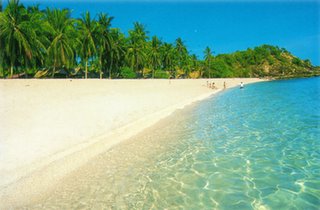
The beaches are one of the most frustrating contradictions. For instance, take Koh Samui, an island off the east coast of the Gulf of Thailand. I stayed there in a bungalow on Chaweng Beach, and while I loved the foot-caressing sand and the wondrous scenery, I expected a secluded paradise, mainly because Thailand has mastered the art of the seductive website.

Instead I found a Mexican beach town with twice the number of cheesy hawkers. An endless parade of vendors interrupted my "serenity" to hawk soccer balls, sarongs, bracelets, ice cream, wooden flutes, henna tattoos, doughnuts, carpets and sunglasses. (They also sold delicious roasted corn.) The town itself was a postmodern madhouse, with hundreds of Germans who looked like Mike-Myers-as- Dieter, all shuffling down nearly nonexistent sidewalks or wedging themselves into knockoff stores. (Fake watches, Armani suits, DVDs.)

Shoehorned between the knockoff stores are massage parlors. Most aren't fronts for prostitution (no need for fronts in prostitution-friendly Thailand) but places to drop in for, say, an after-dinner, one-hour foot massage, which goes for about 50 cents a toe. Luxury is a national obsession in Thailand, and the foot massages are well worth a try, as are the traditional spine-bending Thai massage. Aaah - right there - that's the spot!

One of the more interesting contradictions in Thailand is how people interact with Buddha, whose likeness is everywhere. Everyone gives offerings to monks who pass on the streets, and yet everyone also tolerates behavior that seems straight out of Sodom and Gomorrah.

Even the prostitutes are pious. When you see a go-go girl leaving a hotel in the morning, you'll also see her stop to bow three times to the Buddha. If you're not familiar with Buddhism, be sure to read some basic texts before visiting Asia. The more you know, the more you'll appreciate the way religion is woven into everyday life.

A word or two more about prostitution. It is as ubiquitous as the Buddha. It's a way, perhaps the only way, for females to escape the rice paddies of the countryside and earn money for their families. (At least this is how Thai people I spoke with rationalized it.) There seems to be absolutely no stigma attached to it.

Consequently, every lurid story you've heard about wild bars filled to overflowing with girls-for-hire is true. In some bars, the dancers wear numbers the size of plastic coat-check receipts as a way of expediting selection. Guidebooks that claim families can vacation in Thailand and remain unaware of this seedier facet of life are off the mark. Prostitutes even come and go in the very best hotels.

source: The Denver Post

Read More...
AddThis Social Bookmark Button

The 4 noble truths of Thailand: Part 2  

Samui Island BeachDon't be too attached to your comfort level.

Thailand is a land of dichotomies. Great beauty and wrenching poverty. Ancient religions and rampant prostitution. Expect to be dazzled and confused.

The beaches are one of the most frustrating contradictions. For instance, take Koh Samui, an island off the east coast of the Gulf of Thailand. I stayed there in a bungalow on Chaweng Beach, and while I loved the foot-caressing sand and the wondrous scenery, I expected a secluded paradise, mainly because Thailand has mastered the art of the seductive website.

Instead I found a Mexican beach town with twice the number of cheesy hawkers. An endless parade of vendors interrupted my "serenity" to hawk soccer balls, sarongs, bracelets, ice cream, wooden flutes, henna tattoos, doughnuts, carpets and sunglasses. (They also sold delicious roasted corn.) The town itself was a postmodern madhouse, with hundreds of Germans who looked like Mike-Myers-as- Dieter, all shuffling down nearly nonexistent sidewalks or wedging themselves into knockoff stores. (Fake watches, Armani suits, DVDs.)

Shoehorned between the knockoff stores are massage parlors. Most aren't fronts for prostitution (no need for fronts in prostitution-friendly Thailand) but places to drop in for, say, an after-dinner, one-hour foot massage, which goes for about 50 cents a toe. Luxury is a national obsession in Thailand, and the foot massages are well worth a try, as are the traditional spine-bending Thai massage. Aaah - right there - that's the spot!

One of the more interesting contradictions in Thailand is how people interact with Buddha, whose likeness is everywhere. Everyone gives offerings to monks who pass on the streets, and yet everyone also tolerates behavior that seems straight out of Sodom and Gomorrah.

Even the prostitutes are pious. When you see a go-go girl leaving a hotel in the morning, you'll also see her stop to bow three times to the Buddha. If you're not familiar with Buddhism, be sure to read some basic texts before visiting Asia. The more you know, the more you'll appreciate the way religion is woven into everyday life.

A word or two more about prostitution. It is as ubiquitous as the Buddha. It's a way, perhaps the only way, for females to escape the rice paddies of the countryside and earn money for their families. (At least this is how Thai people I spoke with rationalized it.) There seems to be absolutely no stigma attached to it.

Consequently, every lurid story you've heard about wild bars filled to overflowing with girls-for-hire is true. In some bars, the dancers wear numbers the size of plastic coat-check receipts as a way of expediting selection. Guidebooks that claim families can vacation in Thailand and remain unaware of this seedier facet of life are off the mark. Prostitutes even come and go in the very best hotels.

source: The Denver Post

Read More...
AddThis Social Bookmark Button

The 4 noble truths of Thailand: Part 1  

Thai Buddhist MonkThe Four Noble Truths of Buddhism have been well documented - in short, that life is suffering, that the origin of suffering is attachment, that it is possible to cease suffering and that there is a path to the end of suffering.

What is not quite as well known is that these concepts can also be applied when traveling through Thailand, the Land of the Buddha. Here are the Four Noble Truths of Travel, some of which I learned the hard way.

Noble Truth No. 1:
You will suffer if you are not prepared

Thailand is the epicenter of three major modern worries - tsunamis, terrorism and bird flu - yet Thai natives seldom seem to worry about such things. Don't be lulled into a false sense of security. For starters, it's not a bad idea to travel with a prescription of Tamiflu, which you can easily obtain from your family doctor but may not be covered by your insurance provider.

Also, be ready for potential credit card hassles. Case in (ball)point: Upon arriving in Asia I bought a 5 dollar pen with my debit card. Next thing I knew, Key Bank canceled my card. (They assumed, I assume, it had been stolen by an Asian pen-smuggling cartel.) Just try getting that little mix-up corrected from 8,400 miles away. It took me 80 dollars of phone calls and about an hour of my vacation. OK, it took me a bit longer because I couldn't answer the bank's standard security question - "What's your mother's birthday?" Hey, we weren't that close! So before you leave, let your bank know you're headed to the other side of the world and that there might be some strange transactions cropping up.

You'll need that credit card for Chiang Mai, a 700-year-old city so lovely that nothing can truly prepare you for that first glimpse. Situated about 400 miles north of Bangkok, this is the place to begin a visit to Thailand. Abounding with temples of breathtaking beauty, Chiang Mai is also very modern and somewhat sophisticated, filled with coffeehouses and English-language bookstores. One temple, called Wat Phra That Doi Suthep, sits high above the city, and even though it's filled with tourists, you'll find it worth every elbow in the ribs to experience such an architectural marvel. Still, if you would rather find a less-overrun temple, don't worry - Chiang Mai has more temples than Seattle has Starbucks. And it has a few Starbucks too.

If you get lost, it helps to know about the tuk tuk, a three-wheeled scooter with two seats in the back. A ride back to your hotel is always cheap. Another option is the songtao, a small pickup truck with two wooden benches in back. They circle Thai cities and neighborhoods looking for locals, strays and lost tourists. Cabs are plentiful too, as are motorcycle taxis. Just jump on the back and hold on for dear life.

No matter how you get around, be prepared to barter with the driver.

source: The Denver Post

Read More...
AddThis Social Bookmark Button

The 4 noble truths of Thailand: Part 1  

Thai Buddhist MonkThe Four Noble Truths of Buddhism have been well documented - in short, that life is suffering, that the origin of suffering is attachment, that it is possible to cease suffering and that there is a path to the end of suffering.

What is not quite as well known is that these concepts can also be applied when traveling through Thailand, the Land of the Buddha. Here are the Four Noble Truths of Travel, some of which I learned the hard way.

Noble Truth No. 1:
You will suffer if you are not prepared

Thailand is the epicenter of three major modern worries - tsunamis, terrorism and bird flu - yet Thai natives seldom seem to worry about such things. Don't be lulled into a false sense of security. For starters, it's not a bad idea to travel with a prescription of Tamiflu, which you can easily obtain from your family doctor but may not be covered by your insurance provider.

Also, be ready for potential credit card hassles. Case in (ball)point: Upon arriving in Asia I bought a 5 dollar pen with my debit card. Next thing I knew, Key Bank canceled my card. (They assumed, I assume, it had been stolen by an Asian pen-smuggling cartel.) Just try getting that little mix-up corrected from 8,400 miles away. It took me 80 dollars of phone calls and about an hour of my vacation. OK, it took me a bit longer because I couldn't answer the bank's standard security question - "What's your mother's birthday?" Hey, we weren't that close! So before you leave, let your bank know you're headed to the other side of the world and that there might be some strange transactions cropping up.

You'll need that credit card for Chiang Mai, a 700-year-old city so lovely that nothing can truly prepare you for that first glimpse. Situated about 400 miles north of Bangkok, this is the place to begin a visit to Thailand. Abounding with temples of breathtaking beauty, Chiang Mai is also very modern and somewhat sophisticated, filled with coffeehouses and English-language bookstores. One temple, called Wat Phra That Doi Suthep, sits high above the city, and even though it's filled with tourists, you'll find it worth every elbow in the ribs to experience such an architectural marvel. Still, if you would rather find a less-overrun temple, don't worry - Chiang Mai has more temples than Seattle has Starbucks. And it has a few Starbucks too.

If you get lost, it helps to know about the tuk tuk, a three-wheeled scooter with two seats in the back. A ride back to your hotel is always cheap. Another option is the songtao, a small pickup truck with two wooden benches in back. They circle Thai cities and neighborhoods looking for locals, strays and lost tourists. Cabs are plentiful too, as are motorcycle taxis. Just jump on the back and hold on for dear life.

No matter how you get around, be prepared to barter with the driver.

source: The Denver Post

Read More...
AddThis Social Bookmark Button

Chinatown Bangkok  

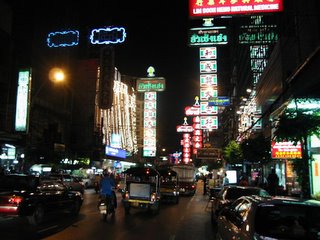
Chinatown BangkokIn 1782 when Rama I, first king of the new Chakri dynasty, moved the capital to Bangkok and began building the Grand Palace, the traders were relocated to a small alley called Sampeng Lane, the nexus of today's China Town.Today, the narrow pedestrian lane is packed with wholesale stores selling paper, fabric and bric-a-brac, and teems with haphazardly roving snack merchants and careering motorbikes overloaded with wide bolts of fabric.

China Town has always been synonymous with commerce. At almost any hour, someone is selling something somewhere in China Town. Even before the first Bangkok department stores opened on Yawarat in the 1930s, the China Town markets sold goods found nowhere else in the city.

Locals believe that they owe this good fortune, wealth and prosperity to the mythical Golden Dragon, the guardian spirit that has watched over the community for centuries.

To first-time visitors, China Town can seem like a daunting maze of traffic- and people-choked lanes and alleys. Yet to fully appreciate the panoply of sights, sounds and smells that give China Town its unique character, it's essential to wander off the beaten track where such hidden delights as 100 year-old shrines, tiny neighbourhoods and countless other treasures await. (A major thoroughfare is rarely more than a block away so getting lost isn't really a problem.)

It's easy to spend an entire morning or afternoon visiting temples (Buddhist, Taoist, Chinese, Sikh and Chinese shrines). Others might choose to focus on China Town's many markets (food, clothing, electrical goods, hardware, audio) or wander along streets devoted to a single product. The area abounds with restaurants (from fancy indoor eateries to open-air stalls) and unusual juxtapositions: a modern fast-food restaurant next to a vendor roasting chestnuts in a streetside wok; Chinese herbs adjacent to Buddhist temple supplies.

This ad-hoc method of seeing the sights isn't nearly as intimidating as it sounds. Almost every square block of China Town boasts temples shrines, markets, restaurants, and unusual juxtapositions. Thoroughly covering one area can be as much fun as rushing here and there to take in 'important' sights. Oh, and don't forget to look up. With so much attention-grabbing activity at street level, visitors can easily overlook the ornate neo-colonial columns, delicately carved shutters and second-floor balconies (often half-hidden behind electrical transformers and telephone cables.)

Whichever aspects of China Town you decide to explore, the most important accoutrements are light clothing, comfortable shoes, plenty of liquids, and above all, a spirit of adventure. A good map is also helpful (Nancy Chandler's Map of Bangkok highlights scores of sightseeing and shopping tips in an easy-to-read graphical format). Don't forget, however, that China Town's vibrancy is an essentially intangible quality that transcends the confines of cartography.

Read More...
AddThis Social Bookmark Button